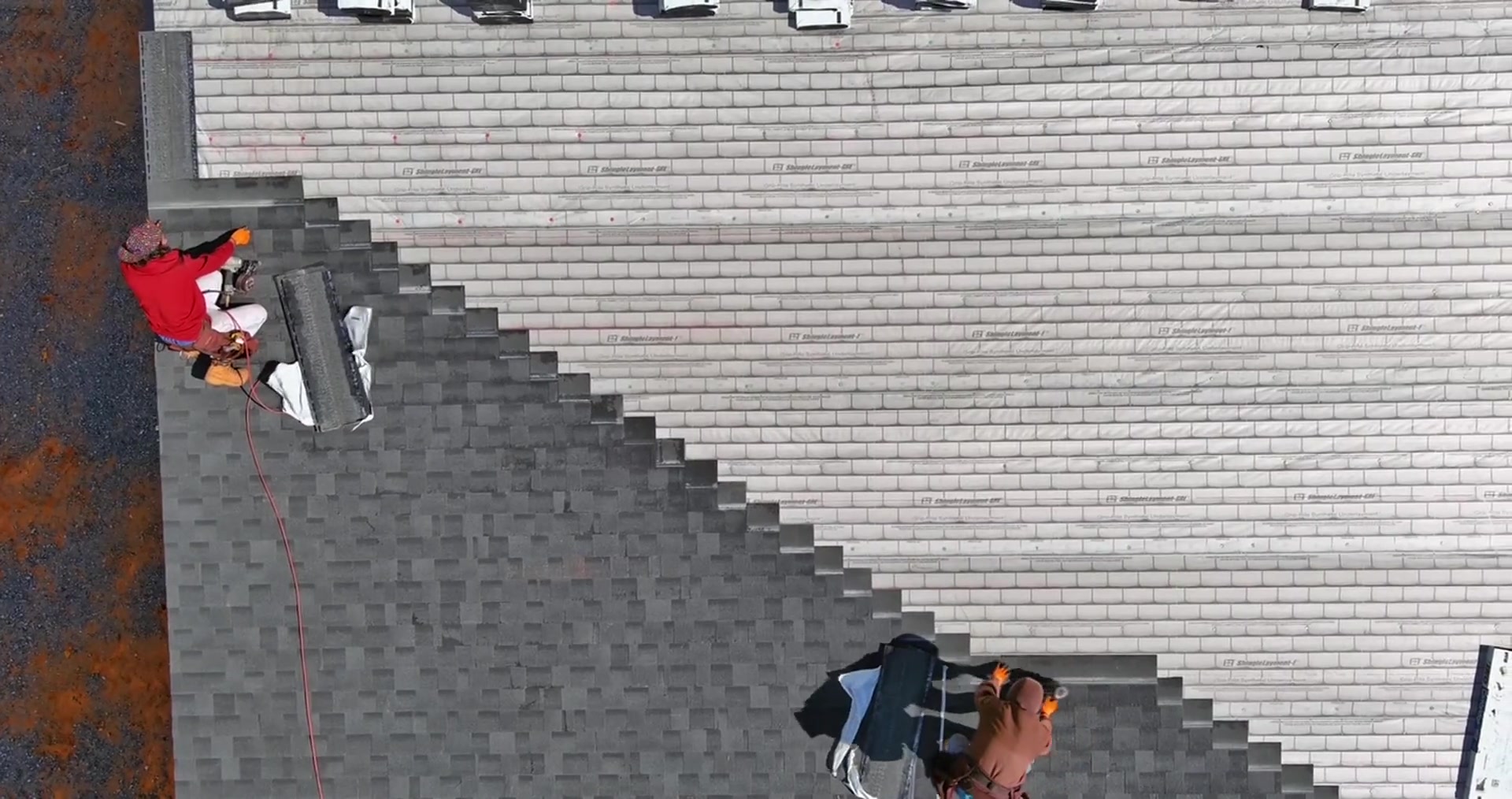
There is a moment, usually after the third leak in two years, when a Metro Atlanta homeowner stops Googling "roof patch" and starts Googling "roof replacement cost." This guide is for that moment. It is not a sales pitch. It is the same conversation we have at the kitchen table when someone calls Roof Now and asks what they actually need to know before signing a contract.
Replacing a roof in Atlanta is a different beast than replacing one in, say, Phoenix. We have heat, we have humidity, we have hundred-year-old oaks dropping limbs every spring, and we have insurance carriers who will absolutely use a fifteen-year-old hail event as a reason to deny a claim today. The good news is that a properly installed asphalt shingle roof in this climate, with the right ventilation and underlayment, will outlast most of the kitchen renovations you've considered.
Read this end-to-end if you've never done this before. Skim the chapter rail on the left if you have. Either way, by the end you'll know what questions to ask a contractor, what a fair quote looks like in 2026 dollars, and where the genuinely expensive surprises live.
The honest 2026 cost range for Atlanta
A full asphalt shingle roof replacement on a typical Metro Atlanta single-family home — call it a 2,200 square foot ranch in Brookhaven or a two-story colonial in East Cobb — runs **$11,500 to $24,000** as of spring 2026. The wide spread is not negotiation theater. It reflects four real variables:- Roof complexity. A simple gable with two planes is half the labor of a hip-and-valley roof with three dormers and a turret. Cuts, flashing, and ridge work are where time disappears.
- Tear-off layers. If your existing roof has two layers of shingles (legal in Georgia until 2014 on most builds), the tear-off and disposal alone can add $1,500 to $3,000.
- Decking condition. This is the wildcard. We don't know how much rotted plywood is hiding under your shingles until the tear-off. Budget $65 to $95 per sheet replaced and assume at least three to five sheets on any home older than 1995.
- Shingle line. GAF Timberline HDZ (the workhorse) is roughly 30% cheaper installed than GAF Grand Sequoia or a designer line. Class 4 impact-resistant shingles add $1,200 to $2,800 but earn most of that back through your homeowner's insurance discount in three to five years.
If a contractor quotes you under $9,000 for a full replacement on a 2,000+ square foot home, something is wrong. Either they're skipping underlayment, reusing flashing, or planning to subcontract to a crew you've never met. Walk away politely.
What a real quote should include line by line
A quote that is just "Roof replacement — $14,500" is not a quote. It's a number. Here is what every legitimate Atlanta roofing quote should itemize so you can actually compare two of them side by side:- Tear-off and disposal — number of layers being removed and dump fee
- Decking allowance — price per sheet of OSB or plywood, with an assumed quantity
- Underlayment — synthetic (e.g., GAF FeltBuster) vs. felt; this matters in Georgia
- Ice and water shield — at all valleys, eaves, and around penetrations
- Drip edge — color, gauge, and whether it's installed under or over the underlayment at the eaves (it should be over at rakes, under at eaves)
- Starter strip — sealed, factory-cut starter at every eave and rake
- Shingles — exact line, color, and warranty class
- Ridge cap — matching hip and ridge cap, not field shingles cut down
- Pipe boots — lead vs. rubber; lead lasts the life of the roof, rubber fails in 8-12 years in our sun
- Step flashing and counter-flashing — at every wall and chimney intersection
- Ridge ventilation — linear feet of continuous ridge vent, with matching intake (more on this in the ventilation chapter)
- Cleanup — magnetic nail sweep included, debris removed daily
- Permits — Atlanta and most Metro counties require a roofing permit; this is usually $75 to $200
If three of those line items are missing from a quote, the contractor is either inexperienced or counting on the gaps to upcharge you mid-project. Both are bad outcomes.
How a one-day install actually works
We've written a full piece on [why a single-day replacement costs less in the long run](https://roofnowatl-mz5mweng.manus.space/blog/single-day-replacement-value), but the short version of the day itself looks like this:A six-person crew arrives between 7 and 7:30 AM. Tarps go down over your landscaping and HVAC unit first — if a crew shows up and starts tearing off without protecting your beds, that's a tell. Tear-off runs from roughly 8 AM to noon. While half the crew is stripping shingles, the other half is loading bundles onto the roof in pre-staged piles. By 1 PM, decking inspection is done and any rotted sheets are out. Underlayment, ice and water shield, and drip edge follow in that order. By 3 PM the field shingles are flying. Hip and ridge cap, pipe boot replacement, and final cleanup wrap by 6 to 7 PM. We do a magnetic sweep of your driveway and yard before we leave so your tires and your kids' bare feet are safe.
If a crew tells you a 2,500 square foot replacement will take three days, ask why. Sometimes there's a real reason — a steep multi-pitch with limited safe staging — but most of the time it means they're under-staffed and you're paying for an extra day of weather risk.
Underlayment, ventilation, and the things that actually fail first
The shingle is the part of the roof you can see. Almost nothing that fails on an Atlanta roof in years 1 through 12 is the shingle itself. It's the underlayment, the flashing, or the ventilation.Underlayment
We use synthetic underlayment exclusively. Felt — the old tar paper — wrinkles, tears, and absorbs moisture. Synthetic costs maybe 20% more on the materials line and lasts the entire useful life of the roof. If a quote in 2026 still says "30# felt underlayment," that contractor is sourcing from 2008.
Ventilation
This is the silent killer of Atlanta roofs. A roof with insufficient intake ventilation in our heat will hit attic temperatures of 150°F+ in July, which cooks the asphalt out of your shingles from below and voids almost every manufacturer's warranty. The fix is not complicated:
- Continuous ridge vent along every horizontal ridge, not box vents
- Soffit intake vents with at least 1 square foot of net free area per 300 square feet of attic floor
- Balanced intake to exhaust — the IRC requires 50/50 split, and most older Atlanta homes have plenty of ridge but starved soffits
If your attic feels like a sauna in July, you don't need a ventilation fan. You need balanced passive ventilation. Adding a power fan to a starved-intake attic just pulls conditioned air out of your living space through every can light and recessed fixture. We've measured it.
Flashing
The single most common cause of leaks on a 5-year-old roof is reused flashing around chimneys and dormers. A good replacement strips and replaces all step flashing, counter flashing, and pipe boots. Reusing them saves the contractor maybe two hours of labor and costs you a $4,000 ceiling drywall repair in year three.
Insurance, hail, and the claim conversation
Atlanta sits squarely in the southeastern hail belt. If you've owned your home for more than five years, there is a non-trivial chance you have insurable hail damage right now and don't know it. Hail damage on asphalt shingles is rarely visible from the ground — it shows up as small bruised circles where the granules have been knocked off and the asphalt mat is exposed.Here's the honest version of how the insurance conversation should go:
- Don't file a claim before an inspection. Filing a claim that gets denied counts against your loss history and can affect your rates for years. Have a contractor look first.
- A good contractor will tell you when you don't have a claim. If a roofer climbs your roof and immediately tells you "you definitely have damage, sign here and I'll handle the insurance," they're not actually inspecting — they're recruiting. Walk away.
- If you have legitimate damage, your contractor should provide a detailed inspection report with photographs, measurements, and a Xactimate-format estimate. The carrier's adjuster will use Xactimate too, so speaking the same language matters.
- Carriers will pay for what they pay for. Your roof, your gutters if dented, sometimes window screens, sometimes the AC fins. Painted siding hail damage is a fight. We tell people what to expect before the adjuster shows up so there are no surprises.
- Recoverable depreciation is real money. Most policies pay you the actual cash value first and release the depreciation portion (often $3,000-$8,000) once the work is completed and invoices are submitted. Don't leave that money on the table.
We help homeowners navigate this every week, and we charge nothing for the inspection or the insurance liaison work. If you have a deductible you cannot afford, tell us — there are legitimate financing options that don't compromise your claim.
What to ask before you sign
Print this list, take it to your top two contractors, and watch how they answer.- Are you a Georgia state-licensed contractor and do you carry general liability and workers' comp? Ask to see both certificates dated for this calendar year.
- Are you a manufacturer-certified installer for the shingle line you're proposing? GAF Master Elite and CertainTeed SELECT ShingleMaster are the meaningful credentials in our market.
- Will my roof be installed by your in-house crew or a subcontractor? Either answer can be fine, but you deserve to know.
- What is your warranty on workmanship vs. the manufacturer's warranty on materials? Workmanship should be at least 10 years. Material warranties without certified installation are limited to as little as 10 years; with certified installation they can be 25 to 50 years.
- Will you pull the permit? They should. If they ask you to pull it as the homeowner, that's a flag — it shifts liability to you.
- What is your payment schedule? A reasonable schedule is something like 10% deposit, 40% on tear-off completion, 50% on final walkthrough. Anyone asking for 50% upfront is using your deposit to fund the previous job.
- Can I see three local references and their addresses? Drive by them. Look at the ridge lines, the flashing, the gutters. Five minutes will tell you a lot.
A short word on financing and "free" roofs
If a contractor offers to "waive your deductible" on an insurance claim, that's insurance fraud in Georgia. It's a felony for them and it can get your claim denied. We will never do this and you should not work with anyone who offers.Legitimate financing exists. We work with two lenders who offer 0% promotional periods up to 18 months and longer-term fixed-rate loans for homeowners who need to spread the cost. We don't get a kickback. The financing is what it says it is.
Next steps
If you've made it this far, you're more informed than 95% of the homeowners who will sign a roofing contract this year. Three things to do next:- Walk your perimeter after the next storm and look for granule wash in your gutter splash zones, missing or curled shingles, and any shiny exposed nail heads on the ridge.
- If anything looks off — or even if it doesn't and your roof is older than 12 years — book a free inspection. We'll send Patrick or one of his crew leads, not a salesperson.
- Get one or two more quotes for comparison. A real contractor welcomes this. Anyone who pressures you to sign before you can compare is selling, not roofing.
Roofs are infrastructure. Treat the decision the way you'd treat replacing your HVAC: methodically, with line-item quotes, and with the long view.